
Is extra virgin olive oil really better than virgin olive oil? Discover what the labels mean, how olive oil is classified, and why the story behind the olives matters.
When you stand in front of the olive oil shelves at a supermarket, the choice can be confusing.
Extra virgin olive oil. Virgin olive oil. Pure olive oil. Cold extracted. First cold pressed.
Some bottles cost just a few euros. Others cost considerably more.
But what do all these descriptions actually mean?
And is extra virgin olive oil always the better choice?
As a family producing olive oil from approximately 350 olive trees in Portugal’s Alentejo region, we’ve learned that there is much more to olive oil than a label.
The way the trees grow, when the olives are harvested, how quickly they are processed, and how the oil is stored all influence the final product.
But first, let’s look at the official differences between virgin and extra virgin olive oil.

What Is Extra Virgin Olive Oil?
Extra virgin olive oil, often abbreviated as EVOO, is the highest officially recognised quality category of virgin olive oil.
It must meet strict chemical and sensory standards.
Under European Union rules, extra virgin olive oil must:
- Have a free acidity of no more than 0.8%.
- Meet additional chemical quality requirements.
- Have detectable fruity characteristics.
- Have no sensory defects according to an official tasting assessment.
The oil must also be obtained directly from olives using mechanical or other permitted physical processes, without chemical refining.
An important point is that extra virgin does not automatically mean stronger, more bitter, or more expensive.
Extra virgin olive oils can be mild or intense, depending on the olive varieties, growing conditions, harvest timing, and processing.
What Is Virgin Olive Oil?
Virgin olive oil is also produced directly from olives using mechanical or other permitted physical methods.
Like extra virgin olive oil, it is not chemically refined.
The difference is in the official quality requirements.
Virgin olive oil must:
- Have a free acidity of no more than 2%.
- Meet the chemical standards for its category.
- Have detectable fruity characteristics.
- Have no more than a limited level of sensory defects.
This means virgin olive oil is a lower official quality grade than extra virgin olive oil, but it is still a recognised category of olive oil suitable for direct consumption.
It can be used for cooking, salad dressings, dipping bread, and many other everyday purposes.
Extra Virgin vs. Virgin Olive Oil: A Quick Comparison
| Characteristic | Extra Virgin | Virgin |
|---|---|---|
| Production | Mechanical or permitted physical methods | Mechanical or permitted physical methods |
| Chemically refined | No | No |
| Maximum free acidity | 0.8% | 2.0% |
| Fruity characteristics | Required | Required |
| Sensory defects | None permitted | Slight defects permitted |
| Suitable for cooking | Yes | Yes |
| Suitable for salads | Yes | Yes |
| Official quality grade | Highest virgin grade | Next grade below extra virgin |
The important takeaway is that these are defined quality classifications, not simply marketing descriptions.
An oil’s category cannot be reliably established by taste alone or by looking at its colour.
What Does Acidity Mean in Olive Oil?
One of the biggest misunderstandings about olive oil concerns acidity.
When people hear that extra virgin olive oil has a maximum acidity of 0.8%, they sometimes imagine that it must taste less acidic than virgin olive oil.
But that’s not what the number means.
Olive oil acidity refers to the amount of free fatty acids present in the oil, expressed as oleic acid.
It is a laboratory measurement, not a measure of how sour the oil tastes.
You cannot accurately determine an olive oil’s free acidity by tasting it.
Factors such as damaged olives, poor storage before processing, and deterioration can increase free acidity.
That’s one reason careful harvesting and prompt processing are so important.
However, acidity is only one part of the classification. An oil must also satisfy other chemical and sensory requirements.
Does Extra Virgin Olive Oil Taste Better?
Not necessarily to every individual, although extra virgin is objectively the higher official quality grade.
Taste is personal.
Some people enjoy strong, peppery olive oils that produce a noticeable sensation at the back of the throat.
Others prefer something milder and softer.
Both mild and robust oils can qualify as extra virgin.
The flavour depends on several factors, including olive variety, ripeness, climate, processing, and storage.
Bitterness and pungency can be positive characteristics of fresh olive oil. They should not automatically be mistaken for defects.
However, rancid, musty, or wine-like off-flavours can indicate quality problems.
For consumers, the best approach is to understand the quality grade while also discovering which flavour profile they enjoy.
Our Olive Oil: A Different Approach to Farming
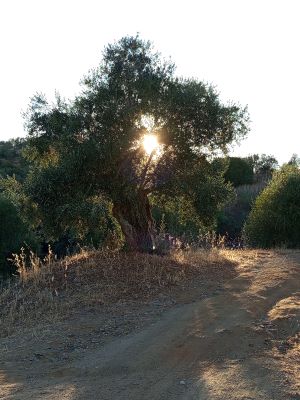
Our family lives on a five-hectare property in Alentejo, Portugal.
We moved here from Austria, leaving behind our previous working lives to live closer to nature.
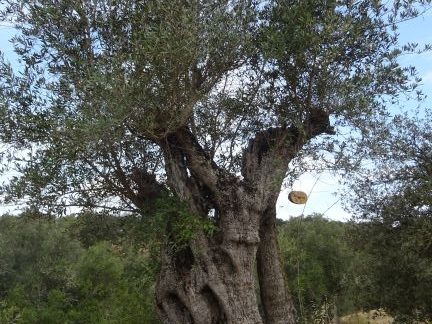
Our land is home to approximately 350 olive trees.
Some are believed to be centuries old. An elderly Portuguese neighbour once estimated that a few could be around 800 years old, although we haven’t had their ages professionally verified.
These trees are very different from the olive plantations you might see in large commercial agricultural operations.
They don’t stand in straight lines.
They grow on hills, slopes, and uneven terrain.
Some are easy to reach. Others make harvesting a serious physical challenge.
We don’t irrigate our trees or use artificial fertilisers.
Our philosophy is simple.
We care for the trees and harvest what nature gives us.
Some years the harvest is generous. Other years it is smaller.
That’s part of living and working with nature.
Why We Harvest Our Olives by Hand
For us, the way we harvest is just as important as the final oil.
We prefer to harvest by hand, working as gently as possible around our trees.
Sometimes we discover bird nests hidden in the branches.
When that happens, we’re reminded that an olive tree is more than a source of fruit.
It’s also a home for wildlife.
We try to work carefully around these habitats.
We know mechanical harvesting can be efficient and, when correctly managed, doesn’t necessarily damage olive trees.
But for our old trees, scattered across difficult terrain, hand harvesting feels right.
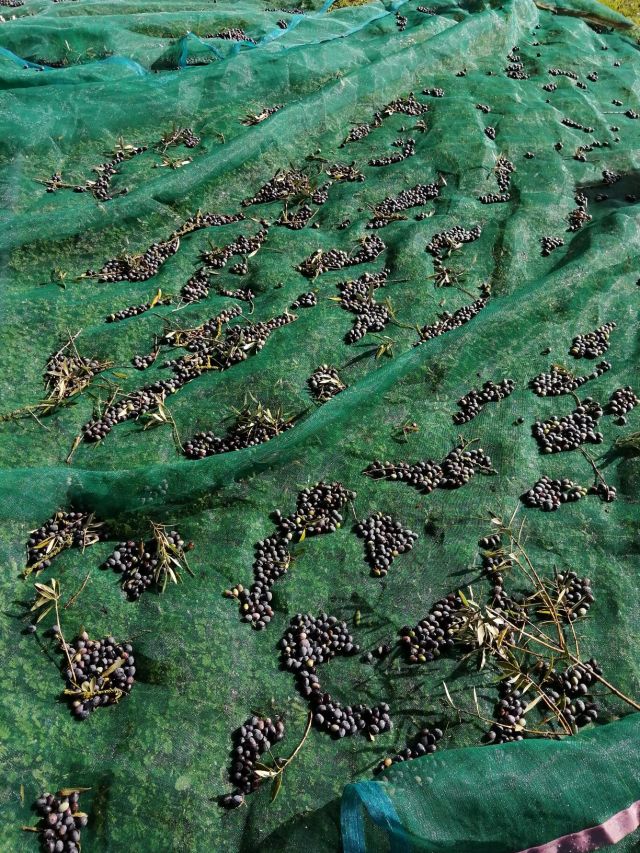
One of our favourite moments is holding a handful of freshly picked olives and letting them run through our fingers.
It’s a simple experience.
But when you know that the tree producing those olives may have stood there for centuries, it becomes something special.
Why We Harvest When the Olives Begin to Change Colour
The timing of the harvest affects both the quantity of oil and its flavour.
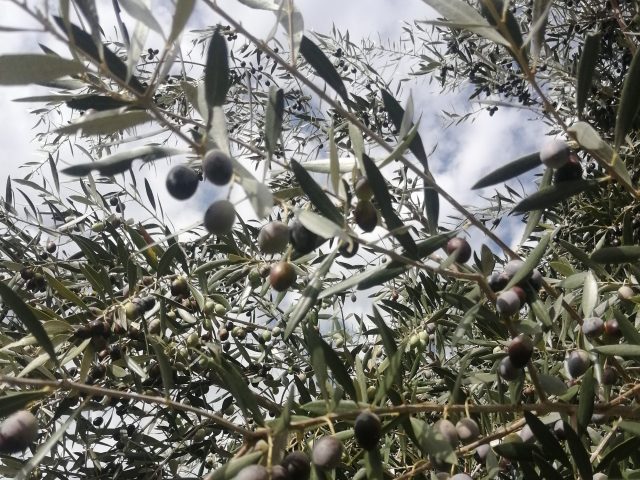
Olives typically begin green and gradually change colour as they ripen.
Depending on the variety, they may turn reddish, purple, or dark.
At Equilibrio, we generally harvest when the olives begin changing colour.
This stage is often called veraison.
Harvesting earlier or later can influence oil yield, aroma, bitterness, pungency, and the concentration of certain natural compounds.
There is no single ideal harvest date for every producer.
Climate, olive variety, weather, and the desired oil characteristics all matter.
For us, the decision comes from observing our trees and working with the conditions of each season.
From Tree to Olive Oil in Just a Few Hours
After harvesting, we bring our olives to a modern olive mill.
We aim to have them processed within just a few hours of picking.
This is an important part of our production process.
Freshly harvested olives can deteriorate if they are damaged or stored under poor conditions for too long.
Quick processing helps reduce that risk.
At the mill, our olives are crushed and processed using modern centrifugal equipment at low processing temperatures.
Centrifugation separates the oil from water and olive solids without chemical refining.
We appreciate this combination of traditional harvesting and modern processing.
Our trees grow naturally, and we collect their fruit by hand.
But when it comes to extracting the oil, modern technology helps us process the harvest efficiently.
Is Cold-Extracted Olive Oil Better?
You may have seen the terms cold pressed or cold extracted on olive oil labels.
These expressions have specific meanings under European rules.
For example, the term cold extraction is reserved for qualifying virgin or extra virgin olive oils obtained below 27°C using particular modern extraction methods.
Lower processing temperatures can help preserve certain aromas and compounds, although the relationship between temperature and quality is more complex than one number.
At Equilibrio, our olives are processed at low temperatures using a modern centrifuge.
However, we don’t claim a specific certified extraction temperature without the corresponding mill records.
This is another example of why accurate information matters more than attractive marketing words.
Why Our Olive Oil Tastes Different Every Year
One thing we’ve noticed over the years is that our olive oil doesn’t taste exactly the same after every harvest.
Generally, we find it fruity with a light bitterness.
But its character changes.
Weather conditions, rainfall, temperature, olive ripeness, and the natural differences between trees all influence the harvest.
We don’t try to make every year’s oil taste identical.
Instead, we appreciate these natural variations.
For us, they are part of the experience of producing olive oil from a real landscape rather than aiming for a perfectly standardised flavour.
It’s a little reminder that olive oil is an agricultural product, shaped by nature.
Why We Use Metal Tins Instead of Clear Bottles
After production, protecting olive oil from deterioration is important.
Light, heat, and oxygen can all affect olive oil quality over time.
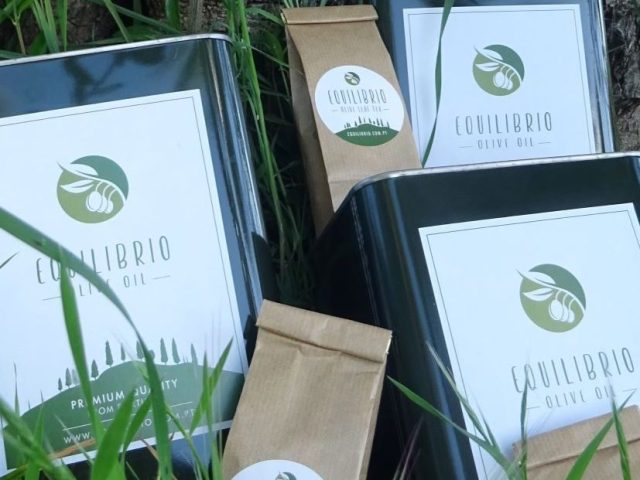
That’s why we package our olive oil in one-litre metal tins.
The opaque packaging protects the oil from light.
We also encourage our customers to keep their oil in a cool, dark place and close the container after use.
Good storage doesn’t turn a lower-grade oil into a higher-grade one.
But it helps protect the characteristics of the oil you already have.
And after all the work involved in growing, harvesting, and processing olives, we believe that protection matters.
So, Is Extra Virgin Olive Oil Worth Buying?
Absolutely.
Extra virgin olive oil is the highest official virgin olive oil category and can be an excellent choice for cooking, salads, and everyday meals.
But understanding the label is only part of becoming an informed buyer.
We also encourage people to ask questions about the oil they purchase.
Where were the olives grown?
When were they harvested?
How were they processed?
How was the oil stored?
Can the producer explain the origin and production methods?
And has the claimed quality category been verified?
These questions help consumers look beyond attractive packaging and make informed choices.
What Makes Equilibrio Olive Oil Special to Us?
We describe our product as virgin olive oil, but we have not yet commissioned laboratory testing to establish its chemical characteristics or a formal sensory classification.
We therefore don’t claim a particular acidity value or that our oil meets extra virgin standards.
What we can tell you is how we produce it.
We know our trees.
We know the land where they grow.
We harvest the olives ourselves.
We process them within a few hours.
And we know exactly why we have chosen this way of life.
We don’t see ourselves as owners of our ancient olive trees.
We see ourselves as caretakers.
The trees were here before us, and we hope they will remain long after we’re gone.
For our family, that relationship is an essential part of the story behind every litre of oil we produce.
Become Part of Our Olive Grove
If you appreciate knowing where your food comes from, we’d love to introduce you to our olive trees.
Through our Equilibrio olive tree sponsorship, you can support one of our trees for a year.
You’ll receive a photograph of your tree, the opportunity to give it a name, and six litres of olive oil from our annual harvest, packed in one-litre metal tins.
Our olive oil is produced once a year, with shipments primarily organised for customers in Austria and Germany.
It’s a way to connect directly with a small family farm and the landscape behind the food you enjoy.
Discover our olive tree sponsorships at www.equilibrio.com.pt.
Frequently Asked Questions
Is virgin olive oil the same as extra virgin olive oil?
No. Both are produced directly from olives using mechanical or other permitted physical methods, but extra virgin olive oil must meet stricter chemical and sensory requirements.
Is extra virgin olive oil healthier than virgin olive oil?
Both contain predominantly monounsaturated fats, including oleic acid. Their exact composition of minor compounds, such as polyphenols, can vary. Extra virgin olive oil may retain higher levels of certain beneficial compounds, but the category alone does not establish the exact nutritional composition of an individual oil.
Can I cook with virgin olive oil?
Yes. Virgin olive oil can be used for everyday cooking, including sautéing, roasting, and preparing sauces.
Is bitter olive oil bad?
Not necessarily. Bitterness is a recognised positive sensory characteristic of olive oil and can be associated with natural phenolic compounds. However, bitterness alone does not prove that an oil is extra virgin.
Is extra virgin olive oil always cold pressed?
Not necessarily. Modern extra virgin olive oil can be produced using centrifugal extraction rather than traditional presses. The expression cold pressed has a specific meaning and should not be used interchangeably with cold extracted.
Does the colour of olive oil indicate its quality?
No. Olive oil can range from green to golden depending on variety, ripeness, and other factors. Colour alone is not a reliable indicator of quality.
Can you tell whether olive oil is extra virgin by tasting it?
A trained sensory panel can assess the sensory characteristics required for classification, but chemical testing is also necessary. An ordinary tasting cannot reliably establish the official category.
Final Thoughts: More Than a Label
Extra virgin and virgin olive oil are different quality categories, with clearly defined standards.
Knowing those differences helps you understand what you’re buying.
But we also believe there’s value in knowing the people, trees, and landscape behind an olive oil.
For us, producing olive oil isn’t about making as much as possible.
It’s about caring for our trees, harvesting their fruit respectfully, and sharing what nature provides.
Every autumn, we return to the same hills and slopes, collect the olives, and begin another harvest.
And every year, we’re grateful that these old trees are still giving us their fruit.
From our family and our olive grove in Alentejo, Portugal.
Explore Equilibrio and our olive tree sponsorships